

7 December 2022
Direct communication with high-rise residents: a gold standard in fire safety
Mario Ambrose
Executive Director, South Essex Homes
Credit image
This presentation on the journey to installation and trialling of a state-of-the-art fire alert communication system at a high-rise block managed by NFA member South Essex Homes was first delivered during an NFA fire safety webinar in June 2022.
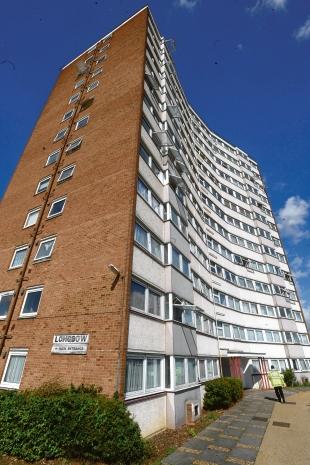
The fire safety story at Longbow, a high-rise block of 80 flats managed by South Essex Homes on behalf of Southend-on-Sea Borough Council, begins almost seven years before the Grenfell tragedy.
Back in 2009 a fire in another social housing block, Lakanal House in the London borough of Southwark in which six people died, made us look with fresh eyes at what we were doing to keep our own high-rise residents safe.
The year after that fire, in 2010, we embarked on a programme of extensive fire safety works at the 13-storey Longbow flats building in Southend.
Although it was to be almost four years before an inquest determined what had gone wrong at Lakanal, it was clear early on from events there that a ‘stay put’ instruction to high-rise residents during a fire could only keep them safe if the building was properly equipped to contain the danger in a small area.
If residents could not get themselves out safely straight away, our responsibility as landlords was to make sure they were as safe as possible while they waited for help to arrive. This meant that effective compartmentation was vital.
In lay terms, compartmentation sub-divides a building into smaller sections or units, each one able to contain or exclude smoke and flames if a fire breaks out. So we made this our priority. In 2010 we began to fit high-spec fire resistant doors to all flats, and similar doors and screens to all common areas. We made sure all walls were finished with materials that fully met ‘Class O’ fire retardant regulations.
The early lesson we took to heart was that fire officers could not communicate directly with residents at Grenfell.
We upgraded emergency lighting and installed automatic smoke vents in the stair wells. All cabling was contained within steel wireways. To support all these technical safeguards, we also made sure the building had a purpose-built information box containing plans of the building and up-to-date information about residents with mobility issues.
With all this done, it seemed residents were as safe as they possibly could be. Then, of course, on the morning of 14 June 2017, as news spread about the tragedy at North Kensington’s Grenfell Tower, we realised we must again ask ourselves whether we had really done all we could.
Again, while it was clear that it would be a long time before all the lessons of Grenfell would be fully understood, some were very clear early on. What we took to heart at South Essex was that the efforts of the Fire Rescue Service at Grenfell had been frustrated by the fact that they could not communicate directly with residents.
We realised that if we could give firefighters the means to talk to our residents directly, the chances of evacuating a high-rise block safely and in an orderly way would be hugely improved.
This was something we could work on right away. We began to look at evacuation alert control equipment (EACIE), now a legal requirement in Scotland for buildings over 18m, but still not required in England although it has been an early recommendation from the Grenfell enquiry. These systems make it possible for fire officers to guide and control the orderly evacuation of occupants from a big building, usually zone by zone, and improved technology meant something like this could be installed with minimal disruption to tenants.
This project has been unique in England’s social housing sector.
The system we eventually decided to trial at Longbow is a hybrid that incorporates the benefits of a public address system and an EACIE.
It is an annunciation system controlled by the Fire and Rescue Service in a similar way to EACIE, but it can also be used to communicate with residents with very specific instructions, whether to ask them to leave their flats or reassure them that there is no need for concern.
The system complies with three British standards (6259, 5839 and 8629). In December 2021 Essex County Fire Rescue Service carried out a five-pump exercise at the block and used the system to reassure residents that this was a practice drill and not an emergency. They also tested the system’s ability to let them communicate with residents floor by floor, rather than the whole building.
The system is monitored 24/7 to make sure faults or damage to speakers is picked up immediately; it has battery backup for 24 hours on standby and 30 minutes on full duty cycle.
This project has been a ground-breaker in England’s social housing sector and because it is unique, it has been important to make sure Essex Fire and Rescue had enough time to assess its effectiveness as they will ultimately be the end-users. When they are satisfied this is the way forward, we will look to have similar systems installed in all Southend’s high rise blocks.