

9 December 2021
Building better landlord-tenant relationships
Lorraine Gill
NFA Tenant Advisory Panel and Stockport Homes Board Member
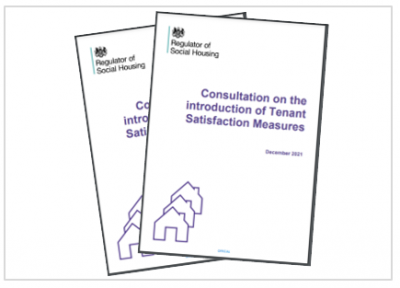
As the Regulator of Social Housing launches the consultation on tenant satisfaction measures promised in last year’s Social Housing White Paper, a member of the NFA’s newly created Tenant Advisory Panel explains why she believe tenant voices are vital for good housing management.
WHAT is home? I believe that whatever our tenure, we all want stability. We all want a safe, clean place we can call home. And that isn’t just about bricks and mortar and a garden and keeping things in good repair. We need good quality, green, safe communal spaces; we want transport links and accessible shops and services; and we all want to live in communities that feel happy and well-integrated.
If we’re going to talk about why the voices of tenants are important, especially in social housing, then the answer is because we should all have access to all these things, whether we rent or buy. Yet there’s often a sense that somehow, if you rent, you wouldn’t expect to have more than one or two of these.
This is why the Charter for Social Housing’s insistence that landlords must learn how to listen effectively to the tenant voice is so important. And I’m pleased that the process to set up the tenant satisfaction measures promised in the Charter has begun today.
Where councils have arms-length management organisations, tenants already have many fantastic opportunities to get involved in the running of their homes and communities, to make a difference, and work with landlords to look at ways of working for the better.
I grew up in a council home and saw first-hand the changes that came when the local authority decided to use the new ALMO structure to manage its housing. Stockport Council tenants were encouraged to get involved in the management of their homes and communities.
Valuing the positive influence social housing has within the community encouraged me to look for employment in the sector. I started working as a Customer Services Advisor with a local housing association 12 year ago.
In more recent years, I became involved in Stockport Homes Monitoring Group. This provided an opportunity to look at the ALMO reports before they were submitted to Stockport Council. It was interesting, provided a layer of tenant scrutiny and assurance, and fitted easily around my home and work commitments
I hear or read comments from people who say, ‘Why do it – who listens?’, and I do understand why they feel that way. Historically, tenants across the sector have been let down and for many the trust is gone. I suspect the stigma that too often comes with being a social housing tenant in this country can also undermine confidence. A paternalistic culture has coloured many generations’ view of social housing and is still deeply ingrained in some areas.
Equally, however, I strongly believe that being involved is one of the ways to shift those attitudes.
Effective communication gains trust – and a comms strategy that includes the frontline housing workers who are closest to tenants is every social landlord’s most powerful tool for building trust.
Residents’ input can be as big or small as they choose. Involved or engaged? Commitment can range from a few minutes completing a survey to weekends spent helping care for a communal space. All of value, all appreciated, it all makes a difference.
Tenants understand better than anyone where the waste is in a process or housing service. With the right training and encouragement, their feedback can shift the focus onto what brings value to their neighbours and their communities. COVID taught us that communities can come together, and individuals and agencies can collaborate to help our most vulnerable and it would be great to see that impulse strengthened through better landlord-tenant relationships.
In Stockport, where the council and ALMO have a really positive relationship, we know that effective communication gains trust. A strong communications strategy, and one that includes the frontline housing workers who are closest to tenants, is every social landlord’s most powerful tool for building trust.
Being proactive instead of reactive is value for money. And when landlords can demonstrate that they’re open to change, that’s what really makes the difference.
Joining up the dots between isolated stories, using qualitative and quantitative data to make informed decisions so that the bigger picture becomes clear. Frees up money that can be spent so much more wisely. And not just on services, but on investing in communities and more homes.
So as the new regulations come into force – there is value for tenants, councils and ALMOs working together.
As Martin Luther King said – you don’t have to see the whole staircase, just take the first step. We all have our own personal journeys that this could apply to. Yet maybe when we talk about the tenant voice working with landlords, then we are talking about a movement that aims to break the ingrained stigmatisation one step at a time. Instead of trying to think ‘what’s it going to look like in ten years’ time?’, we just need to ask ourselves – ‘what’s the next step?’

Lorraine Gill is part of the NFA Tenant Advisory Panel and a Stockport Homes Board Member.